
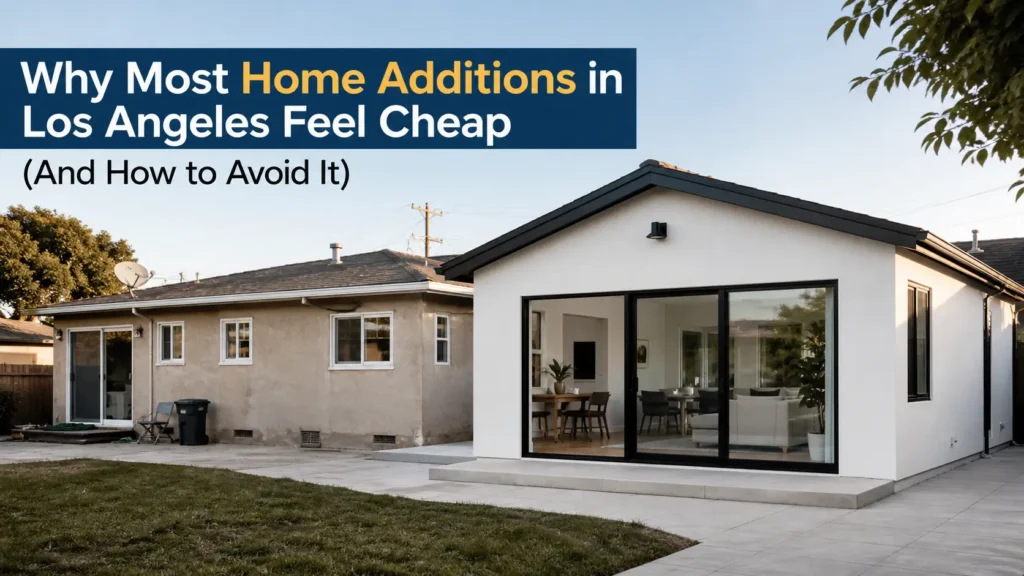
Home additions can completely transform a property, adding both functional space and long-term value. However, many homeowners investing in Home Additions in Los Angeles end up disappointed when the final result looks disconnected, outdated, or obviously “added on.” Instead of blending seamlessly, these spaces often feel like an afterthought. This is not just a design issue; it affects resale value, visual appeal, and overall satisfaction with the investment.
The truth is, a poorly executed addition stands out immediately. It disrupts the architectural harmony of the home and signals shortcuts in planning or execution. On the other hand, a well-designed addition feels natural, as if it was always part of the original structure. Achieving this level of integration requires attention to detail, strategic planning, and a clear understanding of design continuity.
The Real Reason Additions Look Cheap
Many homeowners assume that budget limitations are the primary reason an addition looks low quality. While cost can influence materials, the real issue is usually poor design decisions. When key architectural elements are ignored, even expensive additions can look out of place.
The goal of any successful project should be cohesion. The addition must respect the original structure in terms of proportions, materials, and flow. Without this, the result feels visually jarring. This is where experienced builders like BuildWright Construction INC focus differently, prioritizing integration over mere expansion.
Mismatched Rooflines Break the Entire Look
One of the most noticeable flaws in residential additions is a mismatched roofline. When the new structure has a different slope, height, or style, it immediately signals that it was added later. This creates a visual disconnect that lowers the perceived quality of the entire home.
A seamless roofline requires careful planning from the beginning. The pitch, materials, and alignment must complement the original design. In high-quality Home Additions in Los Angeles, the roof is often redesigned or extended in a way that ties both structures together. This ensures the addition does not look like a separate unit but rather an intentional extension of the home.
Poor Transitions Between Old and New Spaces
Another common issue is the transition point between the existing home and the new addition. Many projects fail because this connection is treated as a simple doorway rather than an architectural opportunity. The result is an awkward shift in style, lighting, or proportions.
Smooth transitions require thoughtful design. This includes consistent trim work, aligned sightlines, and balanced lighting. When done correctly, the homeowner should not be able to clearly identify where the original structure ends and the addition begins. This level of detail is what separates average construction from premium craftsmanship.
Ceiling Height Mistakes That Ruin Proportion
Ceiling height is often overlooked during planning, but it plays a critical role in how a space feels. If the ceiling in the addition is lower or higher than the original home without proper design compensation, it creates an immediate sense of imbalance.
In Los Angeles homes, where open and airy spaces are highly valued, mismatched ceiling heights can make the addition feel confined or disconnected. Proper planning ensures that ceiling levels align or transition naturally using architectural features such as beams or step ceilings. This maintains visual consistency and enhances the overall flow of the home.
Cheap Window Placement and Design
Windows are more than just functional elements; they define the character of a space. Poorly placed or mismatched windows can instantly downgrade the appearance of an addition. This includes differences in size, frame style, or alignment with the original home.
High-quality Home Additions in Los Angeles prioritize window consistency. This means matching proportions, maintaining symmetry, and ensuring that natural light flows evenly throughout the home. When windows are thoughtfully integrated, they enhance both the interior and exterior, making the addition feel intentional rather than improvised.
Flooring That Doesn’t Flow
Flooring is one of the most critical aspects of visual continuity. A sudden change in material, color, or pattern between the original home and the addition can break the entire aesthetic. This is one of the quickest ways to make an addition feel cheap.
Seamless flooring creates a unified look. Whether using hardwood, tile, or engineered materials, the goal is to extend the existing style into the new space. When an exact match is not possible, strategic transitions must be used to maintain harmony. This approach ensures that the addition feels like a natural extension rather than a separate area.
The Importance of Architectural Consistency
Every element of a home, from rooflines to finishes, contributes to its overall identity. When an addition ignores these elements, it disrupts that identity. Consistency does not mean copying every detail, but it does require respecting the original design language.
In Los Angeles, where architectural styles vary widely, maintaining this balance is especially important. Whether the home is modern, Spanish, or traditional, the addition must align with its core aesthetic. This is what creates a cohesive and high-end appearance.
Planning Beyond Square Footage
Many homeowners approach additions with a focus on size, more space, more rooms, and more functionality. While these are valid goals, they should not come at the expense of design quality. An addition that looks out of place can actually reduce the overall appeal of the property.
Smart planning considers both form and function. It ensures that the new space enhances the home visually while also meeting practical needs. This approach leads to better long-term value and a more satisfying living experience.
How to Avoid These Common Mistakes?
Avoiding a cheap-looking addition starts with choosing the right approach from the beginning. This includes working with professionals who understand design integration, not just construction. Every decision from layout to materials should be made with the goal of creating a seamless result.
Attention to detail is key. This means evaluating how each element interacts with the existing structure and making adjustments where necessary. It also involves thinking ahead, ensuring that the addition will continue to look cohesive as the home evolves over time.
Why the Right Builder Makes All the Difference
The difference between an average addition and a premium one often comes down to the builder’s mindset. Some focus on completing the project quickly, while others prioritize craftsmanship and design harmony.
BuildWright Construction INC positions itself differently by focusing on creating additions that feel original to the home. This approach goes beyond basic construction, emphasizing architectural alignment, material consistency, and thoughtful execution. The result is a space that not only functions well but also enhances the overall character of the property.
Final Thoughts
Homeowners investing in Home Additions in Los Angeles want more than extra space; they want a result that feels refined, cohesive, and valuable. Unfortunately, many additions fall short due to avoidable design mistakes. From mismatched rooflines to poor flooring transitions, these issues can make even a large investment feel underwhelming.
The key to success lies in integration. When every detail is carefully planned and executed, the addition becomes indistinguishable from the original home. It feels natural, enhances the property, and delivers the high-end look homeowners expect.
Choosing the right team and focusing on design continuity ensures that the final result does not just add space but also elevates the entire home.