
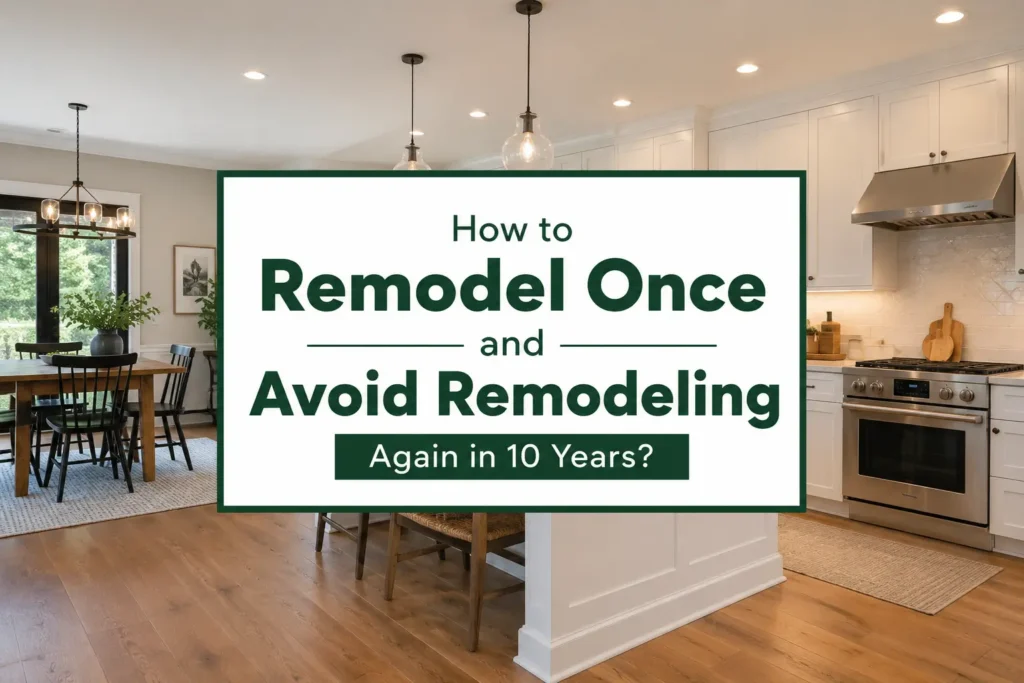
The best way to avoid remodeling again in 10 years is to focus on long-term functionality rather than short-term trends. Homeowners who invest in quality materials, thoughtful layouts, durable systems, and future-ready design decisions are more likely to enjoy a home that continues to meet their needs for decades without requiring another major renovation.
Many homeowners begin a remodel with the goal of creating a home they will love for years to come. Yet it is surprisingly common to see homes undergo another major renovation less than a decade after the previous one.
In many cases, the issue is not poor construction. Instead, homeowners often make decisions based on current trends, immediate needs, or budget shortcuts that fail to support their long-term lifestyle.
A successful remodel should not only solve today’s problems but also anticipate future needs. By planning strategically from the beginning, homeowners can avoid costly updates and enjoy lasting value from their investment.
Start With a Long-Term Vision, Not a Short-Term Wishlist
One of the biggest mistakes homeowners make is designing a remodel around their current lifestyle without considering how their needs may change over time.
Before making design decisions, think about how your household may evolve during the next 10 to 20 years.
Questions worth considering include:
- Will your family grow?
- Will children eventually move out?
- Will aging parents live with you?
- Do you plan to work from home long term?
- Is this your forever home?
- Could mobility needs change in the future?
A remodel that accommodates future lifestyle changes is far less likely to feel outdated or inadequate a few years later.
Prioritize Layout Improvements Over Cosmetic Upgrades
Paint colors, fixtures, and decorative finishes can always be updated later. Floor plans are much harder and more expensive to change.
Many homeowners spend heavily on finishes while overlooking layout problems that continue to affect daily living.
Instead, focus first on functionality.
Consider improvements such as:
- Better room flow
- Increased storage
- Improved natural light
- Open living areas where appropriate
- Flexible multi-purpose spaces
- Enhanced indoor-outdoor connections
A well-designed floor plan often delivers more long-term satisfaction than expensive finishes alone.
Choose Timeless Design Over Fast-Moving Trends
Design trends change quickly. What feels modern today may appear dated within a few years.
This does not mean homeowners should avoid style altogether. Instead, use trends selectively in areas that are easier and less expensive to update.
Elements that should prioritize longevity include:
- Cabinet styles
- Flooring materials
- Countertops
- Tile selections
- Interior doors
- Exterior finishes
Timeless design often incorporates:
- Neutral color palettes
- Clean architectural lines
- Natural materials
- Balanced proportions
- Simple detailing
These choices tend to age more gracefully and maintain broader appeal over time.
Invest in Quality Materials Where It Matters Most
Not every component of a remodel requires a premium upgrade, but cutting costs on high-use areas often leads to expensive repairs and replacements later.
Focus on durability in areas that experience daily wear and tear.
Important investments may include:
- Flooring
- Cabinet construction
- Countertops
- Plumbing fixtures
- Windows
- Roofing
- Exterior cladding
Higher-quality materials often provide:
- Longer lifespan
- Better performance
- Lower maintenance requirements
- Improved resale appeal
The goal is not necessarily luxury. The goal is selecting materials that can withstand years of everyday use.
Upgrade Systems While the Walls Are Open
Many homeowners regret spending money on cosmetic improvements while leaving aging infrastructure untouched.
A remodel provides a rare opportunity to access areas that are normally hidden behind walls and ceilings.
Consider evaluating:
- Electrical systems
- Plumbing systems
- HVAC equipment
- Insulation
- Ventilation
- Smart home wiring
Replacing outdated systems during a major remodel is often more cost-effective than addressing failures after construction is complete.
Future homeowners also appreciate homes that have modern infrastructure supporting the visible improvements.
Design for Energy Efficiency and Performance
Energy efficiency is no longer just a trend. It has become an important component of long-term homeownership.
Improving efficiency during a remodel can reduce operating costs while increasing comfort.
Potential upgrades include:
- High-performance windows
- Improved insulation
- Energy-efficient HVAC systems
- LED lighting
- Smart thermostats
- Water-saving fixtures
Homes that perform efficiently often remain attractive and functional for many years without requiring significant updates.
Create Flexible Spaces That Can Adapt Over Time
One reason homeowners remodel again within a decade is that their rooms no longer serve their needs.
Flexible spaces help reduce this risk.
Examples include:
- Guest rooms that can function as home offices
- Bonus rooms that can become nurseries or fitness spaces
- Open areas that support multiple uses
- Multi-generational living solutions
Designing adaptable spaces gives homeowners more options as their circumstances change.
Rather than remodeling to accommodate every life transition, the home can evolve naturally.
Don’t Let Budget Decisions Create Future Problems
Budget management is important, but short-term savings can sometimes create long-term expenses.
When evaluating costs, consider the total ownership experience rather than only the initial price.
Common examples include:
- Low-quality flooring that wears out quickly
- Inexpensive cabinets that require replacement
- Undersized HVAC systems
- Poor insulation choices
- Limited storage solutions
A balanced budget focuses on value rather than simply minimizing upfront costs.
Strategic investments today can prevent another major renovation years down the road.
How Buildwright Construction Inc. Helps Homeowners Build for the Long Term?
At Buildwright Construction Inc., remodeling projects are approached with a focus on long-term functionality rather than temporary design trends. The planning process considers how homeowners use their spaces today while also anticipating future lifestyle changes, maintenance needs, and property goals.
Whether the project involves a whole-home remodel, home addition, kitchen renovation, or structural reconfiguration, the emphasis is placed on thoughtful design, durable construction, and practical solutions that continue to perform well for years to come. By addressing layout efficiency, material quality, and infrastructure improvements early in the process, homeowners can make decisions that help maximize the lifespan and value of their investment.
This long-term approach often reduces the likelihood of requiring another major remodel within the next decade.
Signs a Remodel Was Planned for the Long Term
A well-executed remodel often continues to feel functional and relevant years after completion.
Some common signs include:
- The layout still supports daily life
- Storage remains adequate
- Materials show minimal wear
- Systems continue to perform efficiently
- Design elements feel current without relying on trends
- Homeowners have little desire for major changes
When these factors are present, the remodel has likely achieved its long-term objectives.
Conclusion
The most successful remodels are not necessarily the most expensive. They are the ones designed with the future in mind. Homeowners who focus on functionality, durability, flexibility, and quality construction are far more likely to enjoy their homes for many years without feeling the need for another major renovation.
By making thoughtful decisions about layout, materials, infrastructure, and long-term lifestyle goals, it is possible to remodel once and create a home that continues to serve your needs well beyond the next decade.
Frequently Asked Questions
How long should a quality remodel last?
A well-planned remodel can remain functional and attractive for 15 to 25 years or longer, depending on material quality, maintenance, and lifestyle changes.
What causes homeowners to remodel again too soon?
Common reasons include poor layout planning, trendy design choices, low-quality materials, inadequate storage, and failure to account for future needs.
Should I follow current design trends?
Trends can be incorporated through accessories, paint colors, and décor. However, major investments such as cabinetry, flooring, and structural design often benefit from a more timeless approach.
Is it worth upgrading plumbing and electrical systems during a remodel?
In many cases, yes. Addressing infrastructure improvements while walls are open can prevent future disruptions and reduce long-term maintenance costs.